Executive Summary
A west facing house plan is often misunderstood as "inferior" in traditional Indian Vastu. According to the original Shastras, the West is ruled by Lord Varuna — the God of the Oceans, Water, and Space. It is considered an excellent orientation for professionals, businesspeople, and ethical leaders who seek stability and disciplined growth.
The primary design challenge of a west-facing home is not spiritual — it is thermodynamic. Managing the harsh afternoon "Sunset Heat" is critical for interior comfort. At PlanMyPlot, our west-facing plans focus on advanced "Bioclimatic Interventions." This includes using buffer verandas, vertical facade louvers, Low-E glazing, and double-wall construction (Cavity Walls) to keep your home cool while maintaining 100% Vastu compliance through precise Pushpadant and Varuna pada calculations.
Key Specifications
Section 01
Premium West-Facing Blueprints
1. The 'Varuna Villa' 2BHK (30x40)
On standard urban plots, we move the living room to the West-North-West, allowing the North-East (Ishanya) to remain open for positive energy. This layout ensures the house feels spacious while rejecting the 4 PM solar radiation.
- Entrance: Specifically placed in the 3rd or 4th pada for wealth stability.
- Cooling: A deep front porch acts as a 'Thermal Buffer' for the main hall.
- Master Bed: Placed in the South-West for grounded authority.
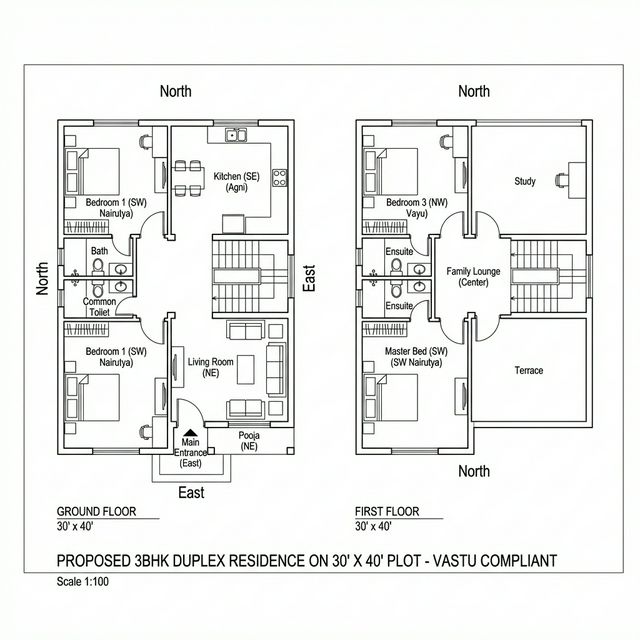
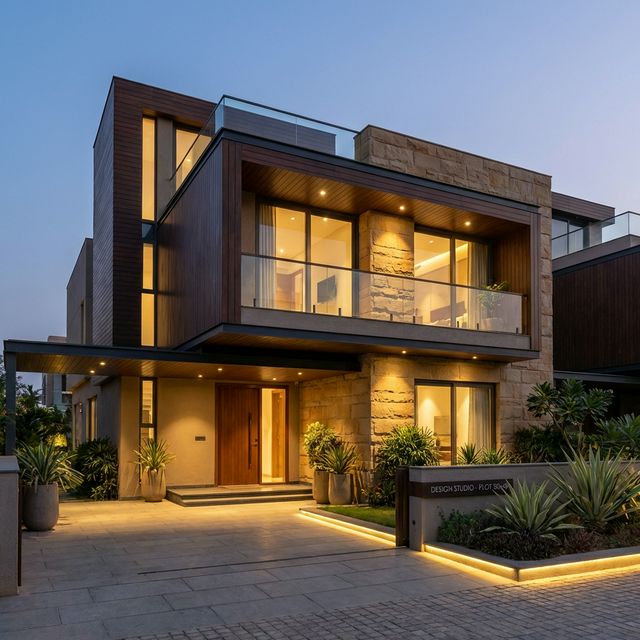
2. The 'Pushpadant' 3BHK Duplex
For west-facing duplexes, we recommend 'Selective Glazing'. Large windows are kept on the North and East walls for soft morning light, while the West facade is dominated by vertical fins or 'Breezeway' screens that allow air but block 70% of the sun's heat.
Design Tip: Use the ground floor west front as a garage or a shaded deck. This keeps the primary living volume 10-15 feet away from the hot exterior edge, significantly reducing cooling costs.
Section 02
Vastu for West-Facing Plots: Debunking Myths & Identifying Padas
There is a widespread misconception that East or North facing plots are automatically 'good' and West or South are 'bad'. This is a distortion of classical Vastu Shastra. A West-facing house, governed by Lord Varuna (the planet Saturn), is highly auspicious for wealth, politics, and business stability when engineered correctly.
1. The Entrance (3rd/4th Pada)
The most critical aspect. Divide your West frontage into 9 equal sections. The main door must strictly fall in the 3rd Pada (Sugriva) or 4th Pada (Pushpadant). This guarantees immense financial gains and social respect. Avoid the 1st, 2nd, and 8th/9th padas.
2. The Kitchen Myths
The South-East (Agneya) remains the best zone for the kitchen, even in a West-facing home. If that is occupied, the North-West is the secondary option. Never place the kitchen in the North-East or South-West.
3. The Master Bedroom
Ensure the master suite is located in the South-West (Nairutya) corner. As the heaviest part of the house, this placement grounds the head of the family and stabilizes finances.
4. The Pooja Room
The North-East (Ishanya) is strict for the Pooja room or meditation space. Keep this corner light, clean, and free of heavy furniture, overhead tanks, or staircases.
The Direct Advantages
- Evening Light: Perfect for families who spend evenings at home, offering spectacular sunset views.
- Warmer Winters: The afternoon sun penetrates deep into the house, keeping it naturally warm during winter months.
- Career Growth: Activating the West energy brings social networking success and rapid career progression for corporate employees.
Debunking Vastu Myths
- Myth: West homes bring bad luck.
Fact: Bad luck comes from a Southwest entrance, not a West-facing plot in general. - Myth: They are too hot to live in.
Fact: With modern cavity walls, Low-E glass, and vertical louvers, heat is blocked before it enters the living space.
Section 03
Popular West-Facing Plot Sizes in Bangalore
Bangalore's BDA and BBMP layouts are traditionally gridded, making West-facing plots highly common. Depending on your land size, our architectural strategies adapt to maximize space and manage the afternoon heat:
30x40 West Facing Plan
1200 Sq Ft (Most Popular)
On a 30x40, we use a deep front portico to create an air-buffer zone. This allows for a comfortable 3BHK duplex or a rental-friendly G+1 setup where the main living wall avoids direct 4 PM sun exposure.
40x60 West Facing Plan
2400 Sq Ft (Luxury Core)
With 40ft width, we precisely target the 3rd and 4th Vastu Padas for a grand entrance. The added depth allows us to place high-mass utility rooms (like a home theater or large stairwell) on the West edge, keeping the inner core perpetually cool.
50x80 West Facing Plan
4000 Sq Ft (Mansion Scale)
For 50x80 estates, we implement a 'Double Facade' system. A secondary aesthetic layer of wooden louvers or Jali screens acts as a massive thermal shield, allowing large glass views without the heat penalty.
Section 04
2025 Cost Estimates for West Homes
West-facing homes benefit from UPVC French windows with Low-E glass. While slightly higher in upfront cost, they offer the best ROI through energy savings in Indian climates:
| Finish Level | Avg Cost / Sq Ft | Specialized West Shading |
|---|---|---|
| Standard Build | ₹1,950 | Basic Porch |
| Premium Build | ₹2,350 | Vertical Fins + Tinted Glass |
| Luxury 'Smart' Home | ₹2,850+ | Automated External Blinds |
Get a personalized estimate on our Construction Cost Calculator.

Design Tips from
Professional Architects
Use vertical shading fins or louvers specifically on the West facade; they block the low-angle afternoon sun while allowing natural ventilation.
The West and South compound walls should be taller and thicker than those on the East and North to maintain energetic and thermal balance.
Place your overhead water tank in the South-West corner of the terrace to provide the 'Vastu Weight' required for stability.
If building on a West-facing plot, ensure the building's floor level is higher in the South and West compared to the North and East.
Avoid large glass panels on the West wall unless they are protected by deep balconies or heat-rejecting film.
Place high-mass rooms like libraries, master suites, or storage rooms on the West side to act as 'Thermal Buffers' for the rest of the house.
Commonly Asked Questions
Technical insights and project advice for this category.
Risk-Free Architectural Planning
100% Satisfaction Guarantee
If your first draft doesn't meet your brief, we revise it — free. No arguments. Loved by 500+ families. Not satisfied? We'll redesign it.
Incremental Payments
You only pay for what you get. Payments are broken into small milestones, ensuring you're happy with each stage before moving to the next.
A West-facing plot is not a challenge—it's an architectural opportunity for unique, vibrant volumes and spectacular evening light. With the right Vastu alignment and thermodynamic shading, your West home can be a true haven of stability and success.
Transform your West plot into 'The Sunset Sanctuary'. Download our West plan collection or book a free consultation now.